

Core Concept: “AI Optimization = SEO Fundamentals 2.0”
AI optimization isn’t a new game — it’s a natural evolution of SEO.
Instead of chasing hacks, focus on three timeless pillars that both Google and AI search (ChatGPT, Bing Copilot, etc.) rely on:
1. Site Structure
- Speed + Mobile-first: Make pages load fast and be mobile-friendly. Use GTmetrix.com for specific technical feedback (better than Google PageSpeed Insights).
- Clarity of navigation: Eliminate distractions. Every page should drive toward a clear conversion or next action.
- Simplicity over clutter: Removing unnecessary widgets, scripts, or pop-ups often improves performance more than adding new ones.
2. Site Content
- Unique content is rewarded. Avoid mass AI-generated text. AI tools detect low-quality or duplicated material and may suppress it.
- Focus on buyer intent: Don’t just post “content.” Create content that attracts ready-to-buy users.
- Use SpyFu, AnswerThePublic, and AlsoAsked to see real buyer questions.
- Prioritize queries showing financial or time commitment (“cost,” “best,” “how to hire”) to signal purchase intent.
- Human storytelling wins: AI doesn’t understand emotion. Use authentic stories that connect emotionally — people buy when they relate, not just when they’re informed.
- Build evergreen, interlinked content:
- Create “money pages” (product/service pages with CTAs).
- Write supportive blogs/FAQs that answer specific user questions and internally link back to those money pages.
- Quality beats quantity: 4–10 high-quality human-written articles per month outperform 50+ low-value AI blogs.
3. Site Credibility (The AI Multiplier)
- AI and search engines heavily favor third-party validation.
- Build backlinks and citations via:
- Guest posts, media features, press releases, podcasts, interviews, PR articles.
- AI weighs credibility (pillar #3) more heavily than traditional SEO does — mentions in trusted outlets amplify ranking power.
- Leverage your network to appear in authoritative publications or industry podcasts.
Traffic + Trends Insights
- Organic search (Google/Bing) still drives the majority of global traffic — far exceeding ChatGPT or AI chat tools.
- ChatGPT search volume is growing, but commercially it’s still <1% of Google’s traffic.
- AI is changing user experience, not replacing search.
- Google AI Overviews and ChatGPT responses may reduce click-throughs for knowledge-only queries.
- But commercial and product searches remain dominated by Google.
Practical Strategy for AI + SEO Synergy
- Optimize Structure once (fast load, mobile, clean navigation).
- Publish Strategic Buyer Content monthly:
- Use data tools to identify buyer-intent queries.
- Blend value-first education with subtle CTAs.
- Launch a Publicity Blitz:
- Secure at least one media feature or podcast per quarter.
- Tie those mentions back to your website for backlinks and brand trust.
- Map Your Funnel & Content Together:
- Connect funnel pages to blog content to show depth and authority.
- Make sure your site educates (AI loves depth) while your funnel converts (humans love clarity).
- Audit and Clean Existing Content:
- Use Copyscape and Siteliner to identify duplicate or spun AI content.
- If deleting thin content, redirect old URLs to relevant live pages to avoid dead links and SEO loss.
- Track Metrics Properly:
- Months 1–6: Measure ranking improvements (page 10 → 5 → 1).
- After Page 1 Visibility: Track organic traffic, conversions, and lead quality.
- 90% of clicks come from Page 1, so ranking is the first success metric.
Advanced Tips
- AI can’t feel nostalgia. Use sensory and emotional cues (“grandma’s cookies smell”) to create content AI can’t replicate.
- Document FAQs. Every recurring customer question = a blog or FAQ opportunity that captures real search demand.
- Avoid AI spam traps. Google penalizes “mass-produced” AI content (similar to the 2012 Panda update). Quality control matters more than automation.
- Use AI as a research assistant, not a writer. Let it suggest ideas, then add human voice and story.
Quick Action Checklist
- Run a GTMetrix audit and fix all speed/mobile issues.
- Use AlsoAsked to find buyer questions; plan 6–12 months of content around them.
- Write 4–10 human-written, high-value posts monthly with buyer focus.
- Earn at least one media feature or guest post monthly (for backlinks).
- Audit old pages via Siteliner + Copyscape; delete/redirect low-value or duplicate pages.
- Track ranking movement monthly; focus on quality over speed.
The Catch 22
But how much traffic does ChatGPT even drive?
Non-paid search continues to lead internet traffic by a long shot. It captures 64%, leaving direct search, referrals, paid search, and social to split the remains.
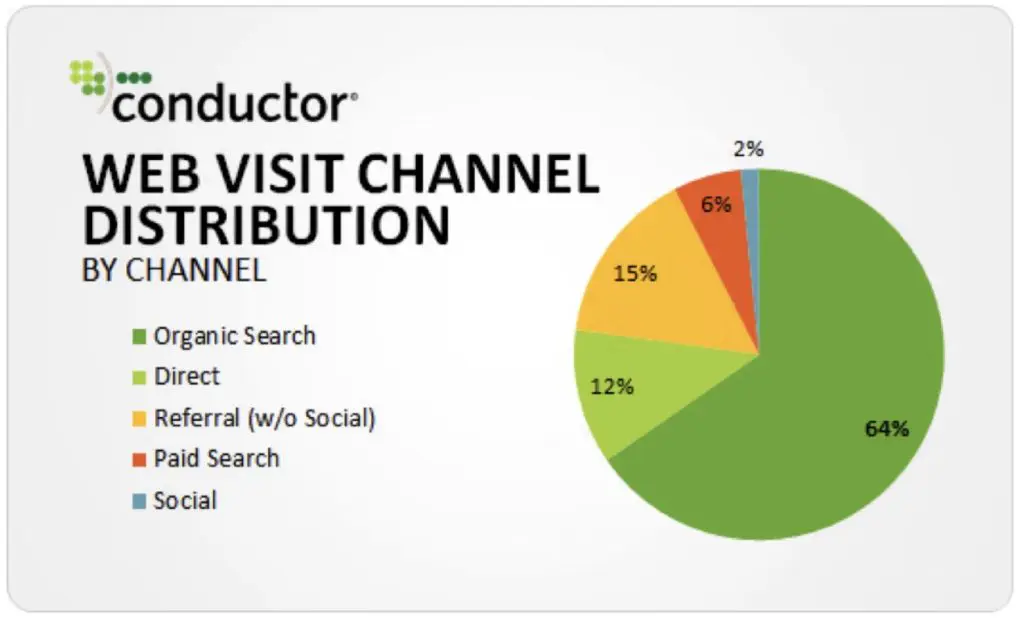
But what about ChatGPT? You can see from the chart above that it’s not even part of the calculus, and you might wonder how this is possible. After all, ChatGPT is the shiny new object. It’s the phenomenon that is topping news headlines and dominating conversations.
You might assume that because ChatGPT is revolutionizing so many things—from fraud detection to data analysis—that it must be revolutionizing internet search, too.
But there’s a plot twist.
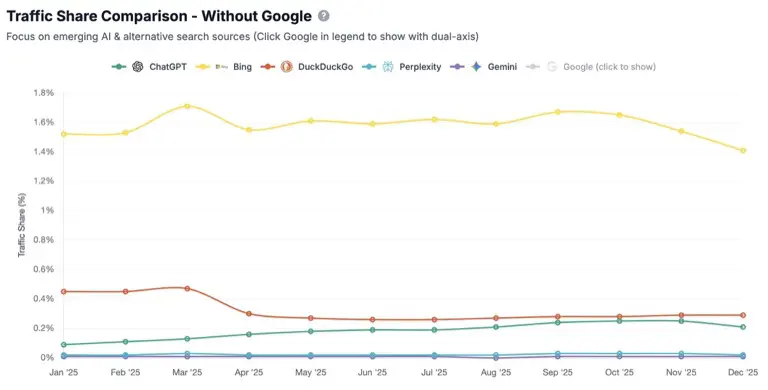
Source: chatgpt-vs-google.com
This graph shows that even at its highest point in 2025, ChatGPT (green line) captured a negligible amount of traffic (just over .2%).
ChatGPT was significantly outranked by Bing, and even by DuckDuckGo.
Google: Still King of the Hill
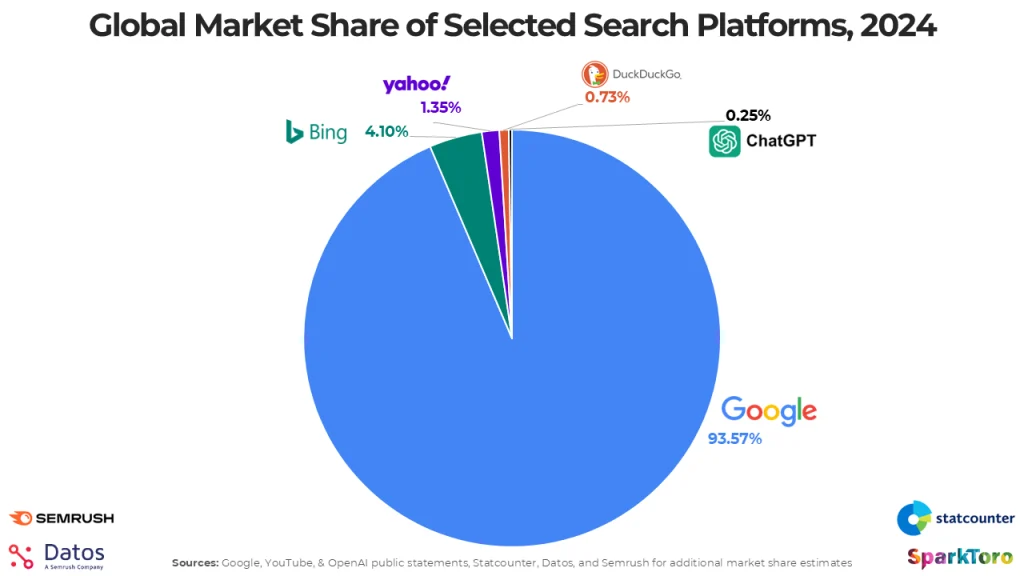
When it comes to traffic, Google still carries the day. Its market share is 800% bigger than ChatGPT’s, and it’s still growing. Last year, Google grew by 22%.
This doesn’t mean you can ignore ChatGPT. AI still has plenty of room to develop, but it is highly unlikely that it will ever cannibalize search engines like Google. After all, Google has a huge data advantage thanks to its massive global infrastructure built over many years and at the cost of billions of dollars.
This includes Google’s proprietary platforms (Gmail, Google Maps, YouTube, Android, etc.). Because ChatGPT can’t directly interact with these platforms, they remain the exclusive domain of Google.
In short, ChatGPT has giant leaps to go before it can ever compete with Google for fresh data. That’s why it’s left to parrot big search engines rather than serving up its own information.
Is ChatGPT Relevant to Every Business?
The AI buzz is making many entrepreneurs feel frantic. They’re sprinting for the bandwagon, not wanting to get left behind. But it’s important to step back from trends, look at the data, and ask important questions like, “What is my ideal buyer’s intent?”
When you do that, you might discover that AI doesn’t need to be a big part of your digital marketing strategy.
Consider that nearly 50% of ChatGPT users are younger than 25. So if your ideal user is 25 or older, there’s already a significantly lower chance that they’ll be using ChatGPT in any capacity.
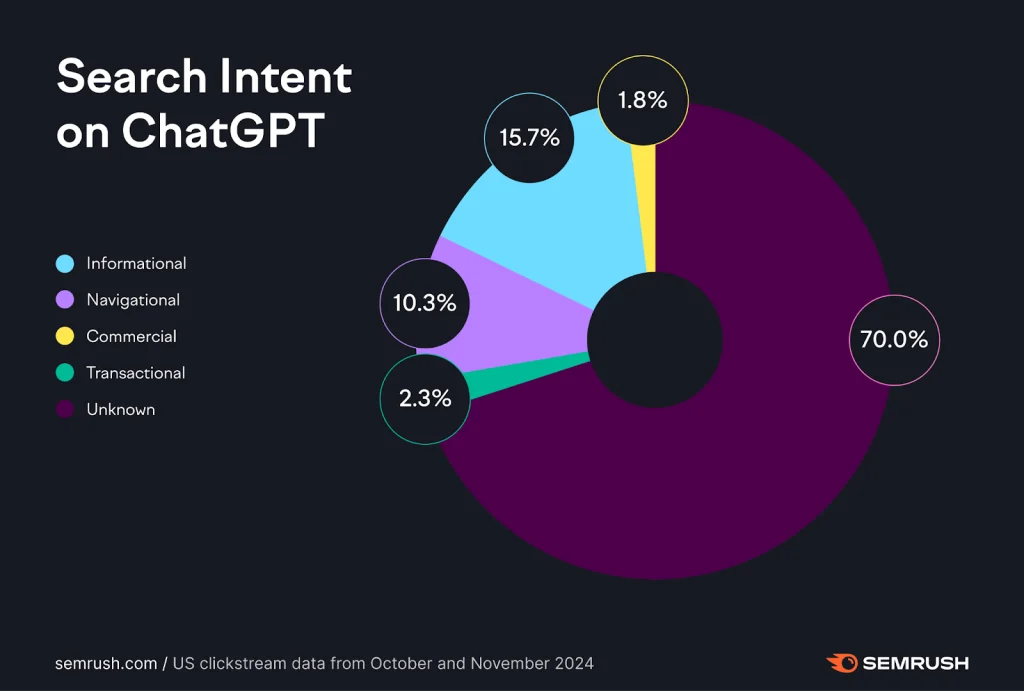
And even if they are on ChatGPT, they are unlikely to be looking for your business. People are much more apt to use ChatGPT for reasons like creating action items, summarizing text, and generating images. But as the chart below shows, they are far less likely to use it for commercial queries.
Before you and your business get pulled into the ChatGPT optimization frenzy, ask yourself these questions:
Is my ideal buyer even using ChatGPT?
And if they are, what are they likely using it for?
How Do I Show Up on ChatGPT?
I do a lot of work for Russell Brunson, co-founder of ClickFunnels. In a very telling moment, he recently asked ChatGPT a question related to his business. ChatGPT served him an answer that was based on information from Russell’s website, which we had optimized for search. In other words, ChatGPT was quoting Russell—back to Russell.
Had we done anything to optimize Russell’s site for ChatGPT? No, because we didn’t need to. At this point, AI is largely a reflection of Google. So we make sure Russell’s company is topping traditional search results, and AI picks up on that.
To capture the best of both worlds, keep building your presence on traditional search engines, and you’ll automatically appear on ChatGPT and other AI platforms.
Action items for better search engine visibility:
- Streamline your site structure so search engines can crawl and index your pages efficiently.
- Maximize your page speed
- Add value-added, buyer intent-based content.
Traditional search loves rich content.- If you have a funnel, add content there. (Check out Russell Brunson’s Secrets of Success to see how we built out his funnel for better SEO.)
- If you don’t have a funnel but do have a traditional website, add high-quality, relevant content and a call-to-action pointing to your funnel.
- Promote your business. Go on a publicity binge with media features. Google and AI reward publicity.
When you focus on dominating traditional search, you position yourself to stand out on both Google and ChatGPT.